
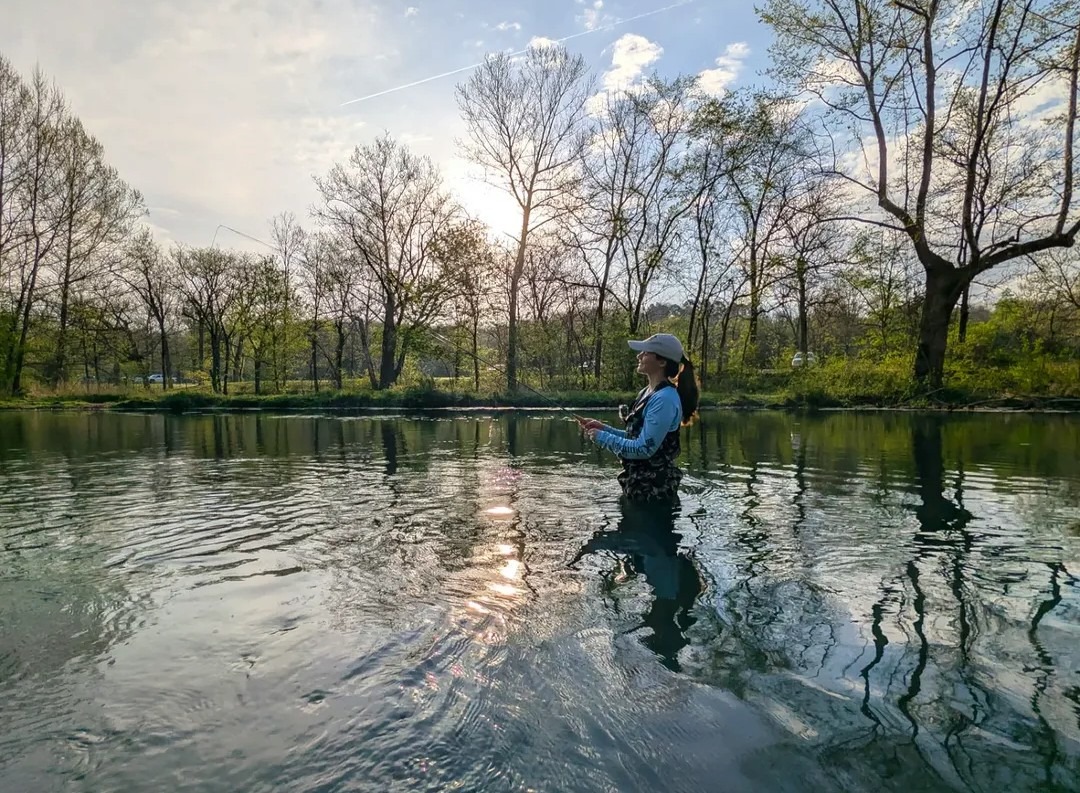
If you’ve come here to learn how to trout fish, you’re in luck because we’re learning together.
I grew up fishing, but I’m not a professional angler or a fishing guide. I’m just someone who decided I wanted to learn how to trout fish because Missouri is home to some great trout hatcheries and several trout-focused fishing destinations like Bennett Spring State Park, Montauk State Park, and Roaring River State Park.
Trout fishing and river fishing are both relatively new for me. I have figured out a few things through our trips- mainly how perceptive trout are and that the folks saying they caught 100 trout in a day definitely count the ones they don’t land in the net- but I also have A LOT to learn.
Trout fishing is kind of like making coffee. There are several methods, cheap and expensive tools, and people get really passionate about it. In this article, I will discuss my personal experiences, gear I use, and what I’ve learned along the way. I won’t cover everything there is to possibly know about trout fishing. As I learn and experience more, I hope to update this article down the road (stream?).
If you take anything away from this article, let it be this. Rules and regulations are subject to change overtime and by location, so always check to make sure you are up-to-date and informed. If you’re in Missouri, here is a link to the Missouri Department of Conservation’s Trout Fishing Regulations and each trout park will have their own regulations online or at the front office. These regulations explain fishing seasons, what permits or licenses you need, possession limits, authorized lures, allowed fishing methods and any prohibited gear or methods.
Gear
Notice how I’ve been saying “trout fishing” and not “fly fishing”? This is not a fly fishing article, but I will touch on some basics so when you walk into the camp store or a local bait & tackle shop, you’ll have your bearings.
I think there’s a misconception that to fish for trout you have to use fly fishing gear. While there can be advantages to this when it comes to the rivers and streams where you’ll find trout in Missouri, it’s not the only option, and what’s “best” depends on a few things like your physical surroundings, the bait or lure you are using, and most importantly, any state, park or local rules/guidelines. I only recently got my first fly rod and set of chest waders, but started trout fishing five years ago.
Let’s break it down:
Waders
This is wholly dependent on where you’re fishing. I’ve fished in chest waders from the deep (well, as deep as 5’3” can get me), sport sandals and rain boots just inside the water, or just kept it strictly dry from the bank. If you do opt for waders, make sure you’re getting something with a grippy sole and durable material. Depending on the season, you may also want to consider insulated waders for extra comfort.
And remember: waders don’t make moving water safe. Always pay attention to current, depth, footing, and weather conditions before stepping into a river or stream.
One Missouri-specific note: felt, matted, or woven-fiber soles are prohibited in many Missouri waters, so check the regulations for where you’re fishing before buying waders. Here is a link to Missouri’s ban on porous-soled waders.
Fishing pole
This can be a fly rod, a dock devil, a spinning rod, or the Batman rod your kid got at Walmart.
Fishing line
In my experience, this might be the most important piece of your setup. In general, trout have incredibly good eyesight, and they can see if your line is too thick or if it reflects any sunlight.
I would recommend fluorocarbon material because it’s nearly invisible in the water, but monofilament is another common option.
One of the frustrating, but useful, parts about fishing clear rivers and streams is you can see when a trout might be interested in the color or shape of your lure, but backs off at the last second. We can’t read their minds, but one of the reasons is they may have spotted your line in the water.
Fly Fishing Setup
Okay, so what if you are considering using a fly fishing rod. It has a few more components beyond just a reel and fishing line.
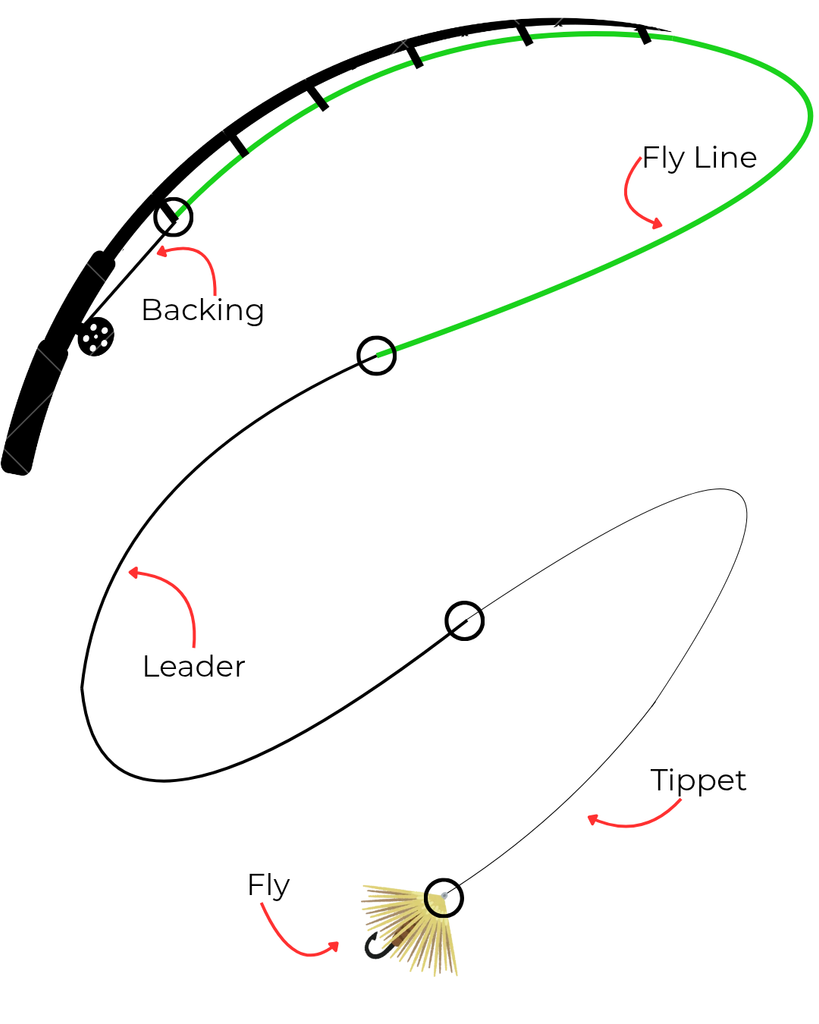
Backing
Backing is a thin, strong reserve line tied directly to your reel’s spool and the fly line.
Fly Line
This is the thick, heavier portion of the overall line setup and is coated in a buoyant outer layer. Unlike traditional fishing line, the weight of the fly line helps load the rod and allows you to cast lightweight flies.
Leader
This looks more like a regular fishing line, but it’s actually a tapered piece of line that tapers into the tippet. The thicker end is called the “butt” and this is what attaches to your fly line. Think thick-to-thick: the thick end of the leader attaches to the thick fly line.
Tippet
This is the thin terminal section that connects the leader to the fly. You are able to buy spools of tippet to tie onto and extend the life of the leader. Beyond just age of the line, the tippet could need extending after multiple lure changes.
Fly
And finally, the part the trout actually cares about! Flies come in a huge variety of shapes, sizes, colors, and styles depending on what the fish are feeding on.
Net
Trout are delicate. If you’ve never touched one before, they’re actually a little slimy (no offense, if you’re a trout reading this). Using a net with a rubber mesh is highly recommended for catch-and-release because it is gentler on their mucus layer and delicate scales.
Miscellaneous
Just a quick checklist of what else you might need:
- Forceps/pliers for easier hook removal
- Stringer if you are not doing catch and release
- Indicators or bobbers
- Polarized sunglasses
- Fishing license
- Daily trout tag- if required, this should be displayed on your person, like on your hat, shirt or waders.
Lures and Bait
Friendly reminder, my experience comes from Missouri State Parks, so this may or may not be different from private locations or other states.
Missouri trout waters can have different regulations depending on the specific location, season, and designated fishing zone. Bennett Spring, Montauk and Roaring River State Park have designated fishing zones that indicate the strict use of flies, artificial lures, or natural bait. Always check the regulations for the specific water you’re fishing before you cast.
For Missouri regulations, a fly is a single point hook, using any material except soft plastic bait and natural and scented bait that is tied, glued, or otherwise permanently attached.
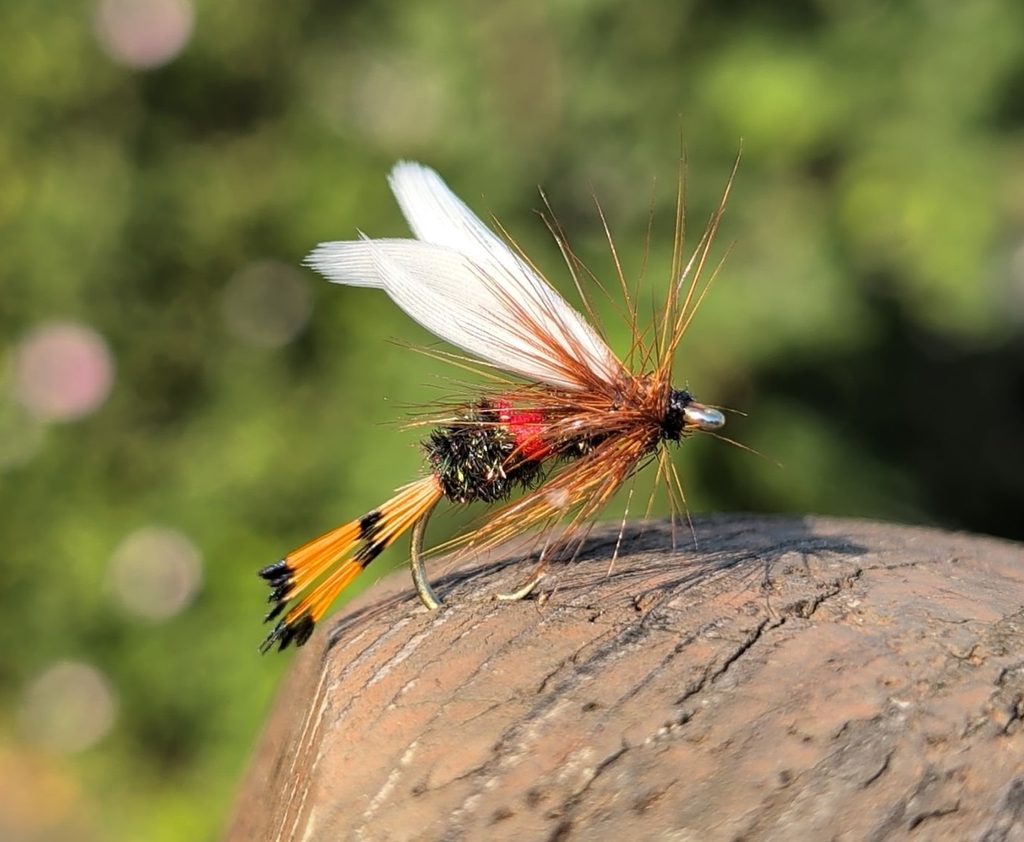
Some of the bait and fly options you’ll see while trout fishing include:
- Rooster Tail with a single point hook
- Micro jig
- Nymphs
- Puff balls
- Mops
- Dry fly
- Streamers
- Natural and scented baits, where permitted
- Minnows
- Nightcrawlers
- Berkley PowerBait
- Dough
- Eggs
- Soft Plastics
- Crawdads
- Grubs
Trout feed at different depths of the water column, depending on what they’re feeding on. This is when the type of artificial lure or bait you’re using comes into play.
If you’re seeing a lot of activity on top of the water, this is when your dry flies might be your best option. Otherwise, you might want to try something that sinks towards the bottom, like nymphs, puff balls or mops.
Weather and cloud cover have an impact on color choices, as well. One rule of thumb you’ll hear is: Dark Skies = Dark Flies.
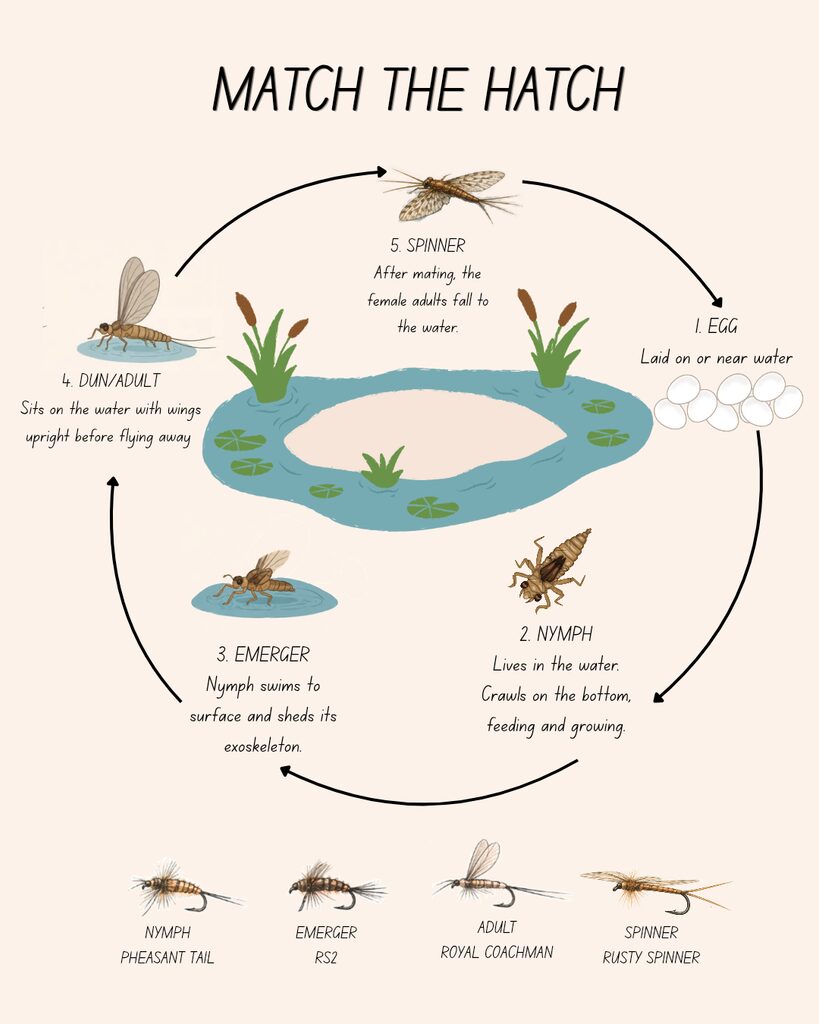
Bug hatches and lifecycles are another thing to consider when switching out your lures. Different bug hatches take place at different times of the year, and the insects go through different life stages that the trout might have a preference for, so Match the Hatch! Below is an illustration highlighting the lifecycle of a mayfly and a few corresponding fly designs.
You have a lot of options to choose from, but do not be tempted by the use of quick-clips or barrel swivels. I don’t use them in clear water because the extra hardware can be visible and may make wary trout less likely to bite.
Golden Rule: Be Adaptive
If it’s not working, it’s not working. You’re better off tying on something new than making 30 more casts.
You don’t need a million flies or bait options, but you should be prepared with a few different options for color, shape, and size.
Don’t be afraid to ask the folks at the camp store, bait & tackle shop, or even your fellow anglers what’s been working that day.
My Trout Fishing Gear
This post contains affiliate links, and I may earn a commission at no extra cost to you.
- Pflueger Trion and 4-lb test fluorocarbon line for my small spinner rod setup.
- Fly Rod and Reel– this is a great beginner friendly kit and includes some starter flies, a fly case, a fly tying tool, and a zinger if you need to clip your tool to your waders.
- Fluorocarbon leader
- Rubber Mesh Net
- Chest waders
- Insulated Chest Waders – these are Trevor’s waders!
- Tevas – my favorite sport sandal
I don’t have any specific lures listed because I tend to follow my own advice and I get my flies from a local bait and tackle shop near the park or at the camp store if the trout are biting on something I don’t already have. Here’s a look at what I’m carrying!
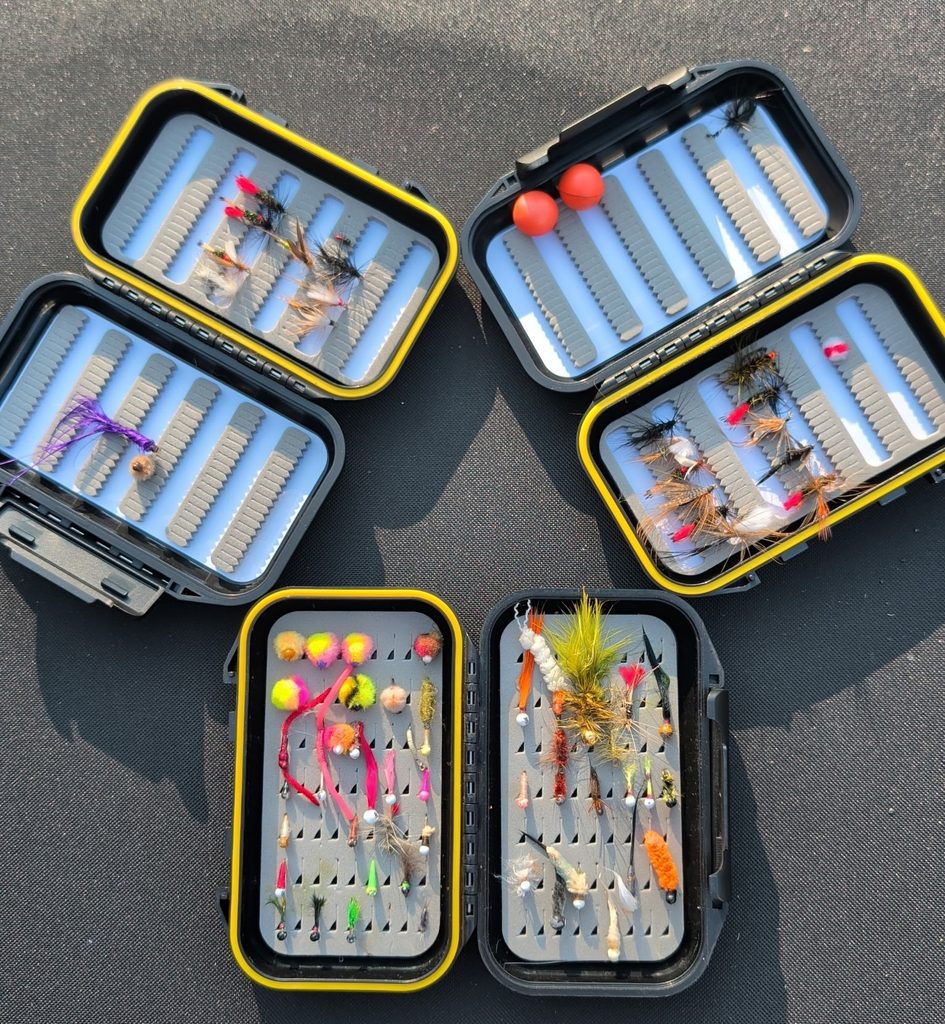
What’s your favorite trout fishing memory? Do you have a favorite tagline like “Match the Hatch” or “Dark Skies, Dark Flies”? Or maybe there is something new you learned from this article?
~ Mo
-

Prairie Garden Trust
Prairie Garden Trust is a nonprofit foundation, and the land has a rich history steeped…
-
Planning Next Year’s Adventures: What I’m Thinking About Before I Book
The calendar year is coming to an end, and for most state parks, the camping…
-


Leave a Reply